
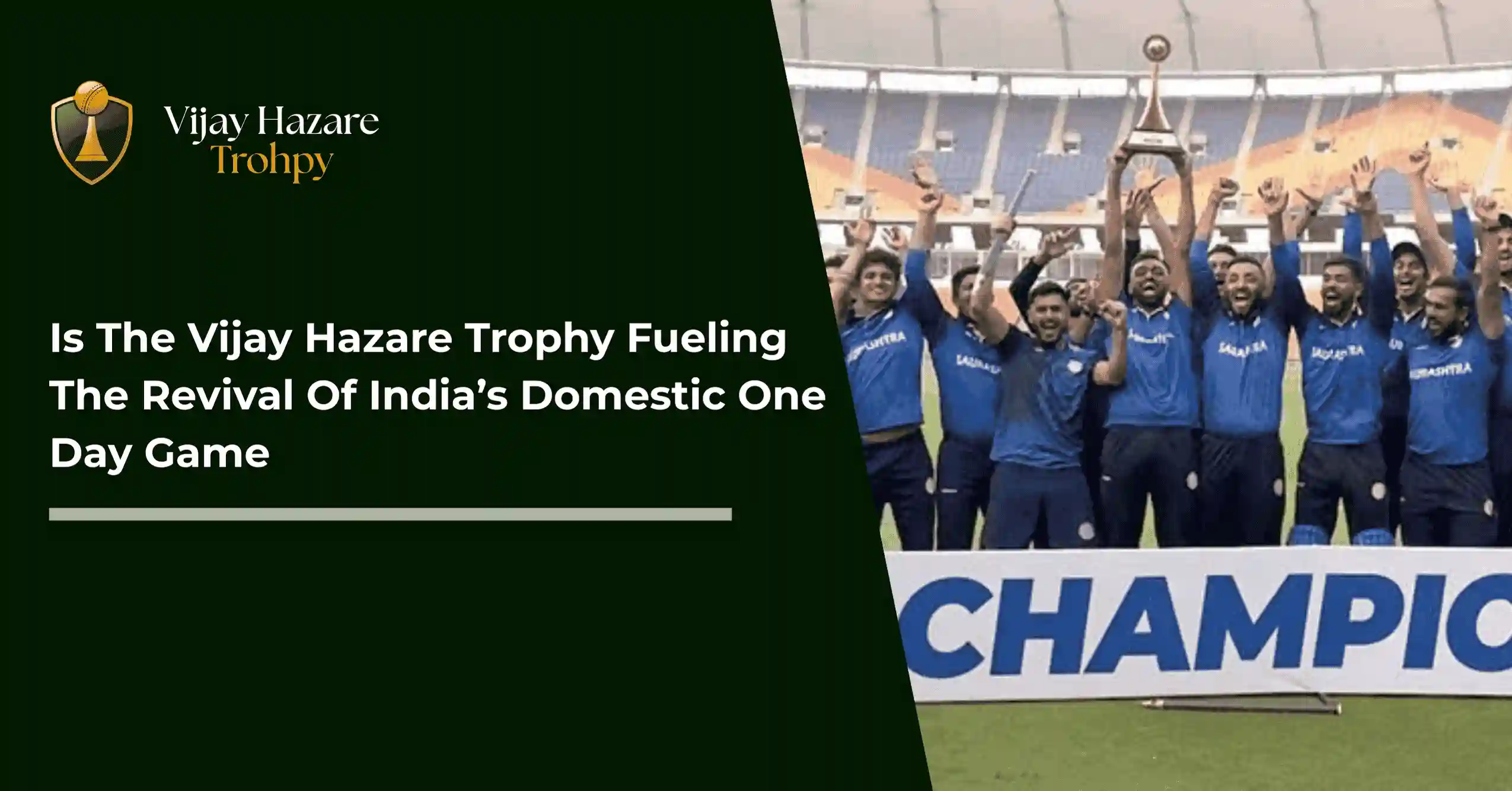
For years, Indian cricket has been dominated by two extremes: the five-day Tests that define grit and patience, and the twenty-over thrillers that light up screens and social feeds. Somewhere in between, the one-day format seemed to fade into the background. Yet the Vijay Hazare Trophy, India’s domestic 50-over competition, has been quietly working to restore its relevance. With new structures, renewed star interest, and young players finding their voice, the tournament is breathing life into a format that once produced legends. This isn’t just a cricket story; it’s about reviving balance in a game that risks tilting too far toward the extremes.
The Format That Mirrors International One-Dayers:
The Vijay Hazare Trophy remains India’s domestic bridge to international ODIs. Played in the same 50-over structure, it gives players a real-world rehearsal for national duties. The alignment allows selectors and coaches to judge players under similar match pressures, from setting a foundation in the power play to controlling the middle overs.
Key points that make it vital:
- It keeps players conditioned to longer tactical battles.
- It refines pacing, rotation, and partnership-building lost arts in modern T20 play.
- It provides data and benchmarks directly applicable to ODI selection.
- The matches demand temperament and adaptability.
- The way batters balance caution with aggression or bowlers sustain spells beyond four overs shapes their cricketing maturity.
Through this reflection of international demands, the Vijay Hazare Trophy becomes a living classroom for India’s next generation of ODI specialists.
Why The One Day Format Needed A Domestic Push?
The dominance of T20 leagues has made the 50-over format appear like a forgotten cousin. Players and fans increasingly favored instant impact cricket.
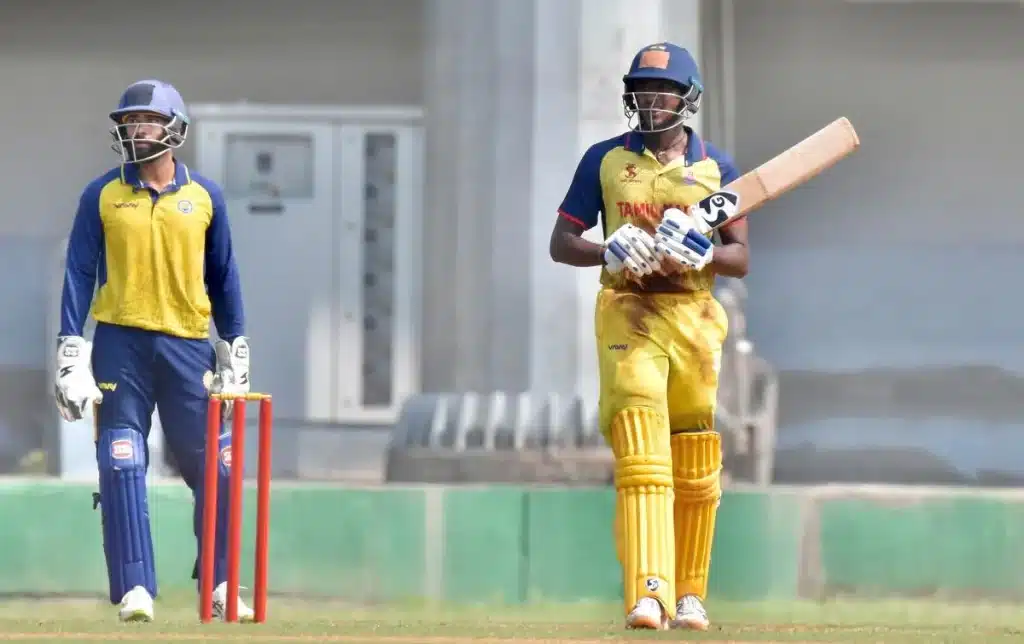
However, ODIs offer a narrative that short formats can’t replicate rhythm, rebuilds, and momentum swings. The Vijay Hazare Trophy thus stepped into a crucial role: to remind both players and spectators why the one-day game matters.
Reasons for the renewed domestic focus include:
- The a need for a platform that tests endurance and consistency.
- Preparing players for tournaments like the World Cup, where ODI temperament is essential.
- Providing selectors a larger pool of match-ready one-day players.
When India A matches start drawing five-figure crowds again, it’s proof that the hunger for this format isn’t dead; it simply needed rekindling. The VHT is doing precisely that.
Structural Changes And Scheduling To Boost Relevance:
The BCCI recognized that without structural protection, the one-day format might vanish from domestic relevance. Hence, it restructured the schedule, spacing out formats to give each its moment. By placing the Vijay Hazare Trophy between the Syed Mushtaq Ali Trophy and the Ranji Trophy, the board ensured white-ball focus remains intact before players switch to red-ball cricket.
Key takeaways from these changes:
- Separate time slots let players train specifically for 50-overs strategies.
- Balanced rest periods help sustain player fitness and intensity.
- Expansion to 38 teams creates competitive parity and scouting depth.
Such reforms turn the VHT into more than a routine domestic event; it becomes a strategic format revival effort. When state sides now plan around this tournament, it indicates the one-day game has regained its rightful space in the calendar.
Star Participation And The Appetite For High Quality Domestic One Day Cricket:
Nothing boosts a domestic tournament like big names walking out in whites with colored pads. Reports that Rohit Sharma and Virat Kohli were encouraged to play in the Vijay Hazare Trophy reaffirm the BCCI’s intent to elevate it. The involvement of stars does more than raise viewership; it sets a performance benchmark.
This has multiple ripple effects:
- Upcoming cricketers get firsthand experience of international standards.
- Crowds return, making matches festive rather than forgettable.
- Media coverage and broadcasting push local cricket back into the national discourse.
When stalwarts bat or bowl alongside debutants, the domestic-international gap narrows. The competition becomes aspirational, not just preparatory. That emotional connection veterans guiding future stars is what breathes soul into a format rediscovering itself.
Selected Players From Vijay Hazare Trophy To National ODI Team:
Over the years, the Vijay Hazare Trophy has acted as a stepping stone for several cricketers who transitioned from domestic success to international recognition. Their performances in the 50-over domestic format served as a major selection benchmark for India’s ODI squad. Below is a table highlighting some of the most notable examples.
| Player Name | State Team | Breakthrough Season | Performance Highlight | Resulting Opportunity |
|---|---|---|---|---|
| Ruturaj Gaikwad | Maharashtra | 2021–22 | Scored 603 runs in 5 matches, including 4 centuries | Selected for India’s ODI squad vs South Africa (2022) |
| Shubman Gill | Punjab | 2018–19 | Averaged 83.50 with crucial match-winning knocks | Earned ODI debut for India in New Zealand (2019) |
| Prithvi Shaw | Mumbai | 2020–21 | Slammed record 827 runs in 8 innings, highest in tournament history | Recalled to India’s ODI team vs Sri Lanka (2021) |
| Sanju Samson | Kerala | 2021–22 | Consistent middle-order anchor with 484 runs | Earned ODI call-up against South Africa (2022) |
| Yashasvi Jaiswal | Mumbai | 2019–20 | Scored 564 runs at an average of 112.80, youngest centurion | Promoted to India A and eventually national selection |
| Devdutt Padikkal | Karnataka | 2020–21 | Accumulated 737 runs with 4 centuries | Called up for India’s ODI and T20 squad (2021) |
| Nitish Rana | Delhi | 2021–22 | Crucial runs in tight finishes and leadership displays | India debut in limited-overs series vs Sri Lanka (2021) |
| Rinku Singh | Uttar Pradesh | 2022–23 | Match-winning consistency in middle overs | Selected for India’s white-ball setup (2023) |
These examples show how the Vijay Hazare Trophy continues to serve as a vital proving ground. Each player’s journey demonstrates that excellence in this domestic one-day format still opens doors to international cricket, bridging the gap between state-level brilliance and global opportunity.
Talent Pipeline And Grooming For International One-Day Internationals:
For every emerging Indian cricketer, excelling in the Vijay Hazare Trophy has become a rite of passage. It’s the first true test of whether they can carry innings under scoreboard pressure or defend totals under the sun. This competition now doubles as India’s unofficial feeder for ODI talent.
Its value can be seen in these layers:
- Exposure: Facing seasoned domestic pros teaches adaptability.
- Assessment: Selectors get tangible 50-over data on temperament and situational awareness.
- Transition: The move to international ODIs becomes smoother.
- Recognition: Performances here translate directly into India A or senior team calls.
Every hundred or five-for in this tournament builds a case for the future. The format’s survival depends on these moments that create stories, heroes, and opportunities, and the VHT continues to provide all three.
Fan Engagement And The Domestic Audience Shifting:
A tournament lives when people watch it, talk about it, and celebrate its stories. The VHT is slowly rekindling fan interest in domestic ODIs. Packed stadiums for recent one-day matches show that nostalgia and excitement can coexist. The 50-over game’s rhythm appeals to fans who enjoy strategy with bursts of flair.
What’s driving the renewed buzz:
- Matches being hosted in regional centers attract loyal crowds.
- Domestic stars like Ruturaj Gaikwad or Prithvi Shaw offer relatable storylines.
- Broadcasters streaming more games improve access and awareness.
Fans today crave connection, not just spectacle. By positioning the VHT as an identity-rich competition where states battle for pride, the BCCI is rebuilding emotional investment in ODIs.
Revival Of One-Day Strategies Through Tactical Evolution:
The Vijay Hazare Trophy has become a proving ground for tactical maturity. In the T20 age, players often forget how to construct an innings or plan a bowling spell across 10 overs. The one-day format restores those fundamentals. Teams have begun using match simulations and data analytics to refine their approach, treating domestic ODIs as dress rehearsals for international tournaments.
Why this matters:
- Batters learn to pace innings across three phases: acceleration, consolidation, and finishing.
- Bowlers develop strategies for both containment and wicket-taking in the middle overs.
- Captains rediscover the art of field placement and bowling rotation.
This revival of cricket intelligence ensures that the next generation of players isn’t one-dimensional. The VHT is nurturing thinkers, cricketers who can adapt to rhythm, pressure, and strategy, essential qualities in modern ODIs.
Impact On Fringe And Emerging Players:
For players hovering on the edges of national selection, the Vijay Hazare Trophy acts as a spotlight. Many such cricketers use this tournament to make a statement that goes beyond statistics; it’s about proving mental strength and adaptability.
Several success stories have emerged:
- Players like Ruturaj Gaikwad and Devdutt Padikkal turned prolific domestic seasons into India caps.
- Consistent performers in the VHT often find themselves fast-tracked into India A squads.
- Bowlers mastering new-ball and death-over skills gain visibility for ODI call-ups.
Beyond selection, the tournament gives emerging talent a taste of professional competition with high stakes and national attention. It reinforces the message that the domestic circuit remains the true gateway to international recognition.
Media Coverage And Digital Boost:
Visibility is often what makes or breaks a domestic tournament. The recent surge in VHT’s digital presence through streaming platforms and highlight reels has expanded its reach. Matches that once went unnoticed are now discussed on social media, sports apps, and analysis shows.
Benefits of this exposure:
- Increased fan interaction through live scores, fantasy leagues, and online engagement.
- Recognition for domestic stars who might otherwise stay in the shadows.
- Sponsorship opportunities that elevate tournament value.
- With regional broadcasters and OTT platforms stepping in, domestic one-day cricket is now accessible nationwide.
- This visibility not only fuels the VHT’s relevance but also restores pride among players representing their states.
Comparison With Other Domestic Formats:
The Vijay Hazare Trophy occupies a unique space between the fast Syed Mushtaq Ali Trophy and the endurance-driven Ranji Trophy. Each serves a purpose, but the one-day competition offers a middle ground of skill and strategy.
A quick comparison:
| Aspect | Vijay Hazare Trophy | Syed Mushtaq Ali Trophy | Ranji Trophy |
|---|---|---|---|
| Format | 50 Overs | 20 Overs | 4 Days |
| Focus | Balance & Strategy | Power Hitting & Pace | Patience & Technique |
| Audience Appeal | Moderate & Growing | Mass & Youth-Oriented | Traditional & Niche |
| National Relevance | ODI Preparation | T20 Pipeline | Test Readiness |
This balance makes the VHT indispensable. It bridges the technical demands of red-ball cricket with the energy of white-ball play, ensuring that Indian cricket produces all-format athletes.
Role Of Coaching And Infrastructure In Strengthening ODIs:
Another silent revolution behind the revival of domestic ODIs lies in coaching and infrastructure. State associations are investing in better pitches, analytics, and player conditioning. These facilities mirror international standards, preparing athletes for global competitions.
Key developments:
- Advanced analytics software to track player efficiency over 50 overs.
- Dedicated one-day training camps focusing on tempo management.
- Improved fitness programs aligning with ODI workloads.
- These changes mean domestic cricket is no longer treated as secondary.
The one-day ecosystem in India now mirrors the professionalism seen in national camps, reinforcing the idea that revival isn’t just emotional, it’s structural.
The Road Ahead For Domestic ODIs In India:
Looking ahead, the future of one-day domestic cricket depends on consistent support, innovation, and relevance. The Vijay Hazare Trophy must continue evolving whether through prize incentives, televised highlights, or collaborations with IPL franchises for scouting.
What lies ahead:
- Integrating data-driven insights for player development.
- Expanding fan outreach through regional marketing and community events.
- Strengthening pathways from VHT to India A and the national ODI side.
The real success will be when domestic ODIs stand independently valuable, not merely as a feeder system but as a celebration of balanced cricket skill meeting patience.
Conclusion:
The Vijay Hazare Trophy has transformed from a calendar filler into a revival mission for India’s domestic one-day cricket. It has restored purpose to a format that was once fading under the lights of T20 leagues. With strategic reforms, star involvement, digital amplification, and genuine fan resurgence, the tournament symbolizes balance, a bridge between instant entertainment and traditional mastery. As Indian cricket continues to evolve, the VHT reminds everyone that the heart of the game still beats strongest in its domestic arenas.
FAQs:
It is India’s premier domestic one-day (50-over) tournament featuring state and regional teams, serving as a feeder for the national ODI side.
It keeps players engaged with the 50-over format, ensuring tactical and mental readiness for international ODIs.
While the Syed Mushtaq Ali Trophy focuses on T20 cricket, the VHT mirrors ODI rules and pacing, testing players’ consistency and strategy.
Yes, top cricketers like Rohit Sharma, Virat Kohli, and Shikhar Dhawan have featured in past editions, boosting visibility and competition.
With improved infrastructure, scheduling, and fan engagement, the VHT is poised to sustain and strengthen India’s one-day cricket ecosystem for years to come.

